Showing posts with label India. Show all posts

Monday, February 20, 2012

Hindu Religious Architecture : Temples

Northern Style: the Vishvanatha Temple at Khajuraho (c. 1000) [1-23]


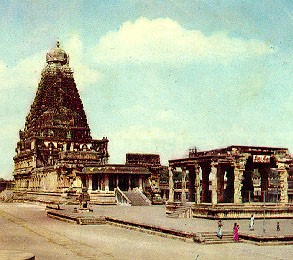
Southern Style: the Rajarajeshvara Temple at Thanjavur (c. 1010) [1-22]


Friday, February 17, 2012

Buddhist Religious Architecture: The Stupa


Examples of Stupas:


Second Quiz: Buddha & Shiva

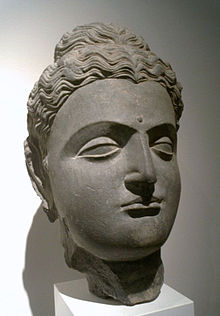
Seated Buddha from Gandhara (Victoria & Albert Museum)

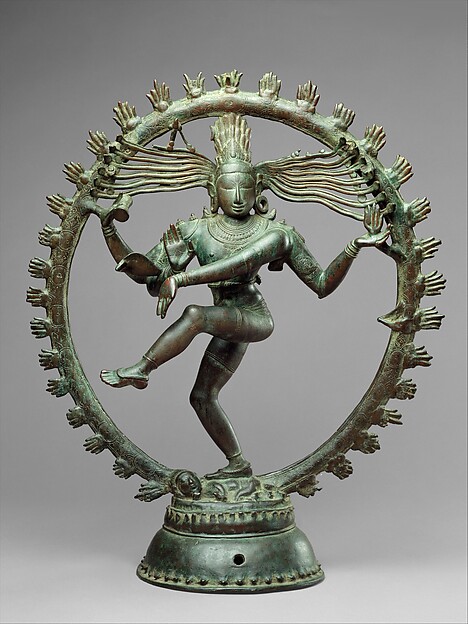
Choose either one of the images here and, in separate paragraphs, describe any three individual symbolic details and their meaning, and then conclude with a paragraph that describes how these three details fit together as parts of  the object's overall meaning. (For those of you counting, that makes four paragraphs.) Quizzes are due & will be collected in class next Wednesday, February 22nd.

Things that matter: a) accuracy of information b) the depth of thought & understanding present in your answer and c) clear and correct language that avoids any hint of plagiarism -- including paraphrasing a source without citation.

Shiva Nataraja (Cleveland Museum of Art)

Tuesday, February 14, 2012

Shiva Maha Deva & Maha Yogi

  • Body covered with ashes
  • Matted Hair
  • River Ganges
  • Crescent Moon
  • Third Eye
  • Half-Open Eyes
  • Ear Rings (Kundalas)
  • Snake
  • Necklaces
  • Mudra 
  • Trident
  • Drum
  • Water Pot
  • Bull
  • Tiger Skin
  • Cremation Ground
  • Mountain 
  • OM symbol

Monday, February 13, 2012

Shiva in Lingam Form


Wikipedia article on Lingam
TempleNet article on Lingam
Story of Shiva's appearance in Lingam Form

Ice Lingam of Shiva at Amarnath
Website for Amarnath Ji Yatra


Schedule Weeks 5 and 6


Week 5: Indian Art: Representations of Shiva


M: Shiva Trimurti (Mahadeva) (1-18)
W: Shiva Linga and Mahayogi
F:  Shiva Nataraja (1-17 and 1-25)

Week 4:  Asian Religious Architecture 

M:  Buddhist Stupas
W: Hindu Temples
F:  Pagodas 

Friday, February 10, 2012

Shiva (Trimurti)


Shiva Trimurti (Elephanta)


Broad Background:  A good overview of Hinduism at Wikipedia

Details: Wikipedia’s page on Shiva
Wikipedia article on Trimurti


360 Image:  Shiva Trimurti at the Elephanta Cave Temple, Mumbai 
Wikipedia entry on the Shiva Temple at the Elephanta Caves, Mumbai

Friday, February 3, 2012

More Buddha Basics: typical features & Gupta style


Teaching Buddha at Sarnath (1-13)

Gupta Period Sculpture

Note the lakshanas seen here:
- the urna or dot between the eyebrows
- the ushnisha or cranial bump
- the mudra or hand position (here, teaching the wheel of dharma)
- elongated ears
- simple monk's robe
- the asana or posture (here, meditating)
- lotus seat (here the folds of his robe & not an actual lotus)
- wheel symbols on feet
- halo behind the head


Other Resources:

Tuesday, January 31, 2012

Class Schedule: Weeks 3 and 4


Week 3: (finish African Figurative Sculpture & begin Representations of the Buddha)

M: Dogon Ancestor Couple (11-9) -- close study
W: Akuaba (11-12) -- review
F:  Quiz Assignment for African Figurative Sculpture; first look at Buddhas

Week 4:  Representations of the Buddha

M:  Gandhara Buddha (1-10) and Buddhist Iconography
W: Buddhas from Mathura (1-12), Sarnath (1-15) Sukothai (2-11),
F:  Buddhas from China (3-11; 3-14), Tibet, Japan

Monday, March 28, 2011

The Taj Mahal


Monday, February 21, 2011

Hindu Temples

Mammallapuram (Mahabalipuram) temples
Rajararajeshvara Temple (also known as the Brihadishwara Temple) at Thanjavur
Kandariya Mahadeva temple

Friday, February 18, 2011

Shiva 1

Shiva Trimurti (Elephanta)


Shiva Mahayogi (Bangalore)


Broad Background:  A good overview of Hinduism at Wikipedia
Details: Wikipedia’s page on Shiva
360 Image:  Shiva Trimurti at the Elephanta Cave Temple, Mumbai 
Wikipedia entry on the Shiva Temple at the Elephanta Caves, Mumbai
Video for Children that describes Shiva & tells some important stories

Daily Schedule for Weeks 6 & 7

Week 6:  representations of Hindu deities: Shiva / Hindu temples

M:  Shiva 1: Shiva as lingam & as Mahadeva (Elephanta temple [1-18]) 
W:  Hindu temple: concepts & forms: (1-22 & 1-24)
F:  
Shiva 2: Shiva Nataraja (1-25)

Week 7:  Chinese art I: concepts & materials

M:  First Emperor's Tomb (3-6) 
W:  Chinese bronzes (3-3) & jades (3-5)  
F:   Chinese 
textiles (3-7) and ceramics (4-5)

SPRING BREAK 

Week 8: Chinese Landscape Painting 

Monday, February 14, 2011

Stupa to Pagoda 3: Chaitya Hall at Karle (cf. 1-14)


Halls like this one at Karle and the ones at Ellora and Ajanta are carved out of hillsides.  All the interior elements are integral to the cave -- meaning that they are not built separately and set into the cave, but entirely carved out of the living rock.  The hall leads back to a stupa.

overview notes of the period from the Dept. of Architecture at UC Berkeley
descriptive entry at Chaitya.com
entry at Great Buildings Online


Friday, February 11, 2011

Friday, February 4, 2011

Buddha Statues from Gandhara


·         Basic Buddhism Guide from BuddhaNet 
·         BuddhaNet article about Buddha’s First Sermon at Sarnath
·         Life of the Buddha essay at the Metropolitan Museum of Art
·         Article on Greco-Buddhist art at Wikipedia
·         Another Gandhara period frieze of the First Sermon at the Met


Daily Schedule for Weeks 4 & 5

Week 4:  Representations of the Buddha 

M:  Gandhara Buddha (1-10) and Buddhist Iconography
W: Buddhas from Mathura (1-12), Sarnath (1-15) Sukothai (2-11), 
F:  Buddhas from China (3-11; 3-14), Tibet, Japan + First Exercise DUE

Week 5: Buddhist Temples: from stupa to pagoda
M:  Great Stupa at Sanchi (1-7)

W: Chaitya Hall, Karle; Borobadur;
Schwedagon Pagoda (2-13)
F: 
Fougang Si Pagoda (3-23); and maybe Horyuji Temple Complex (5-9)

Week 6: Hindu Deities -- esp. Shiva

Monday, March 2, 2009

Northern Temple Style: Khajuraho