Showing posts with label painting. Show all posts

Tuesday, March 27, 2012

Japanese painting: Haboku "Broken Ink" style


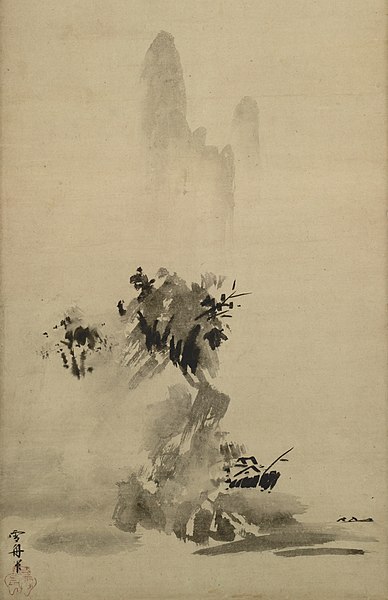
Zen Buddhism had an important influence on Japanese painting during the Muromachi period.  Zen is a form of Mahayaana Buddhism which developed in China and later flourished in Japan. It is NOT a matter of chilling out and being passive; it does involve spontaneity, but only in contrast to great discipline. 
"Zen Buddhism’s emphasis on simplicity and the importance of the natural world generated a distinctive aesthetic, which is expressed by the terms wabi and sabi. These two amorphous concepts are used to express a sense of rusticity, melancholy, loneliness, naturalness, and age, so that a misshapen, worn peasant’s jar is considered more beautiful than a pristine, carefully crafted dish. While the latter pleases the senses, the former stimulates the mind and emotions to contemplate the essence of reality. This artistic sensibility has had an enormous impact on Japanese culture up to modern times."
Zen had a huge influence on Japanese art, as we'll see. It meshes very well with the Shinto aesthetic. But the best place to begin is with paintings like the one above by Sesshu Toyo, a Buddhist monk, using the Haboku (or "Broken Ink") style.

Japanese Painting: yamato-e


yamato-e ("Japanese-Style") painting


Yamato-e style is the authentic national style of Japanese illustrative art, often used for painted scrolls, but also in other forms and media. In looking at yamato-e  from Japan, we’ll be looking at illustrations of The Tale of Genji. Genji monogatari is one of the most important works of Japanese literature -- and the first modern novel in any language. It's still very popular today.


Monday, March 12, 2012

Chinese Painting III


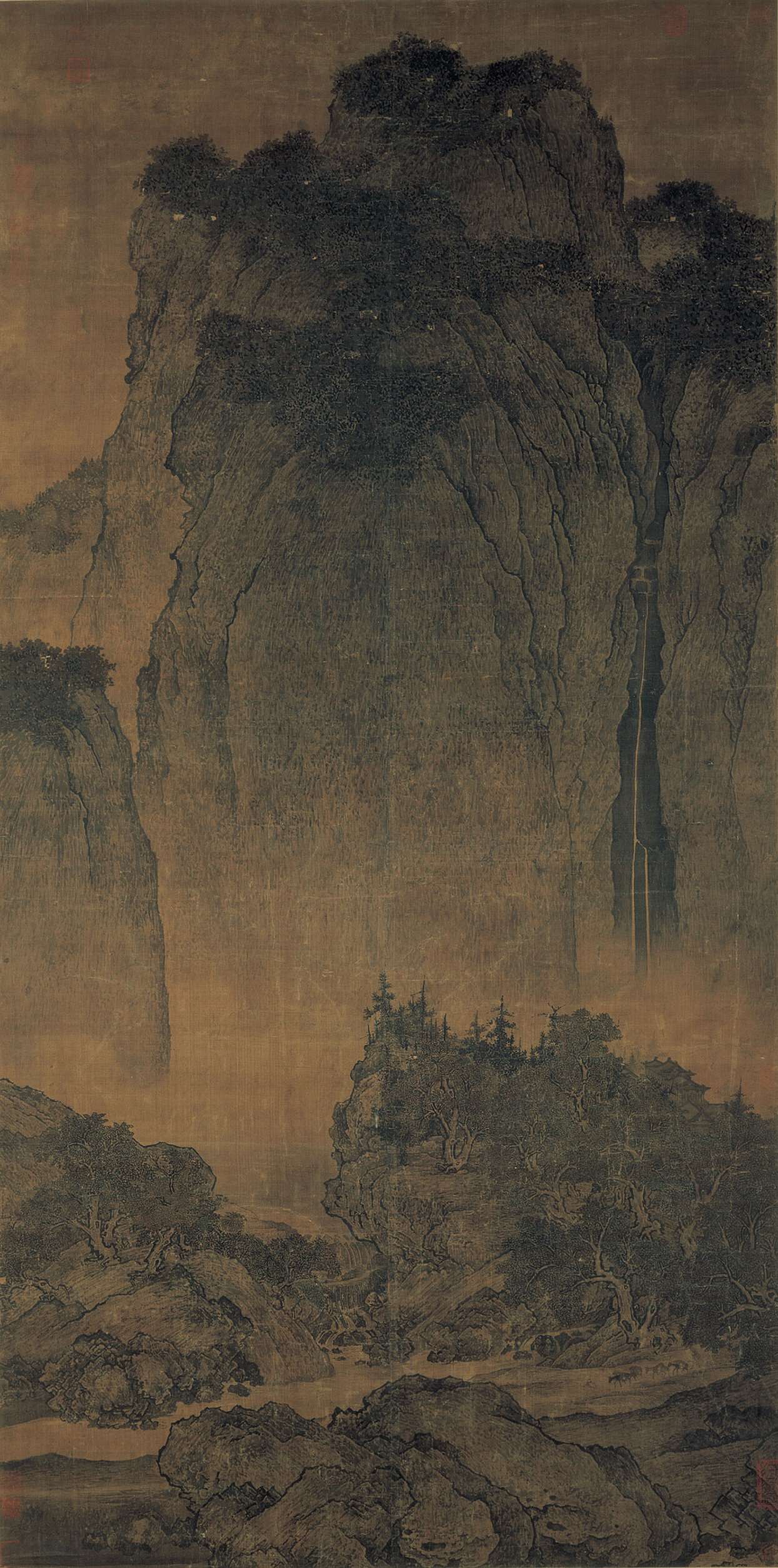
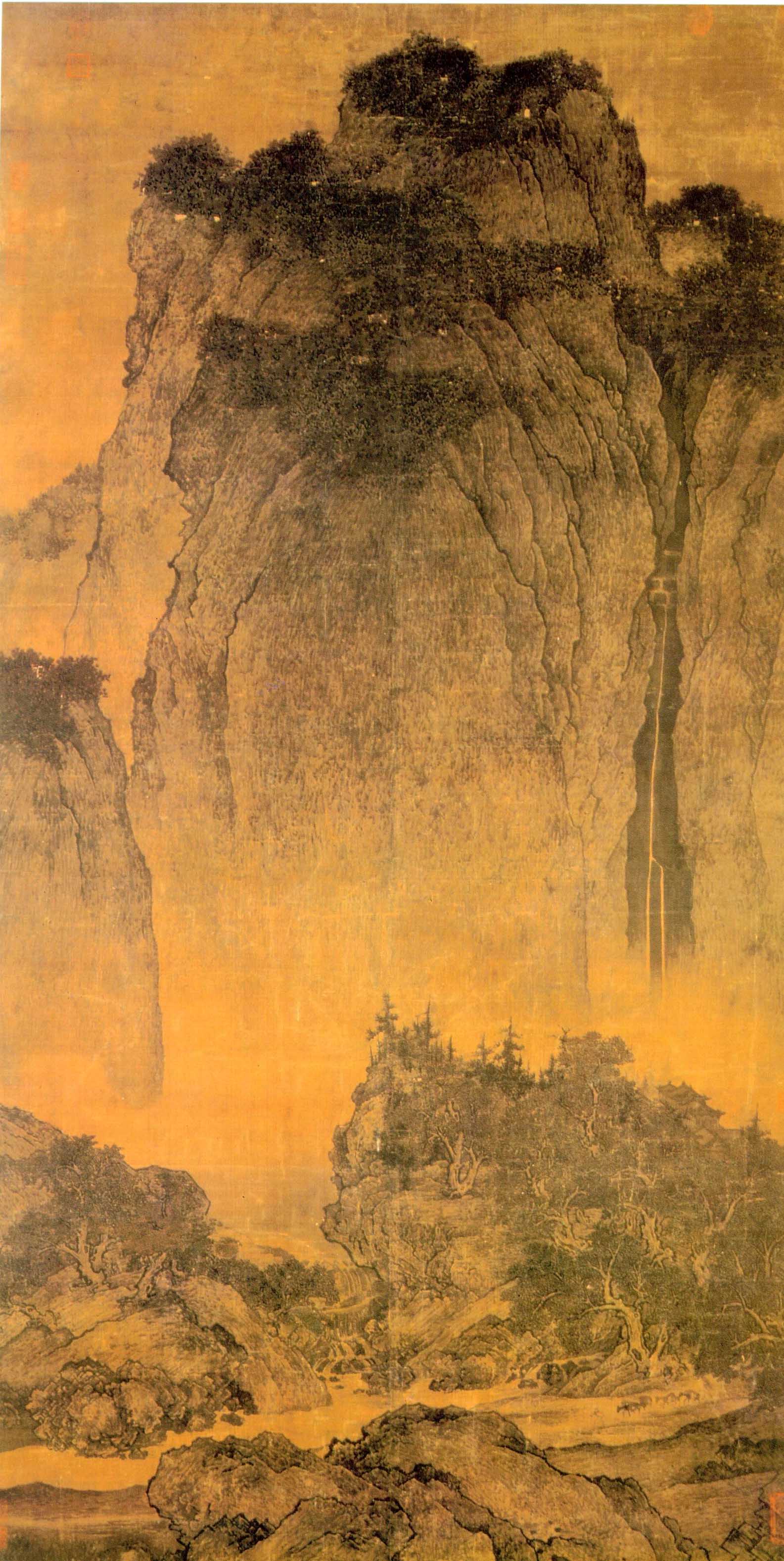
Fan Kuan. "Travelers amid Mountains & Streams"
Fan Kuan:


The Song Dynasty; Northern Song Painting

Chinese Painting II


Zang Zeduan Detail: "Along the River During the Qingming Festival" (Song dynasty): Bridge


Zang Zeduan "Along the River During the Qingming Festival" (Song dynasty)
[Please click HERE to examine the entire scroll]


Article on this painting at Wikipedia HERE
To "read" a Chinese painting is to enter into a dialogue with the past; the act of unrolling a scroll or leafing through an album provides a further, physical connection to the work. An intimate experience, it is one that has been shared and repeated over the centuries. And it is through such readings, enjoyed alone or in the company of friends, that meaning is gradually revealed. 

Liang Kai: Poet Strolling by a Marshy Bank


Thursday, March 17, 2011

Chinese Painting IV

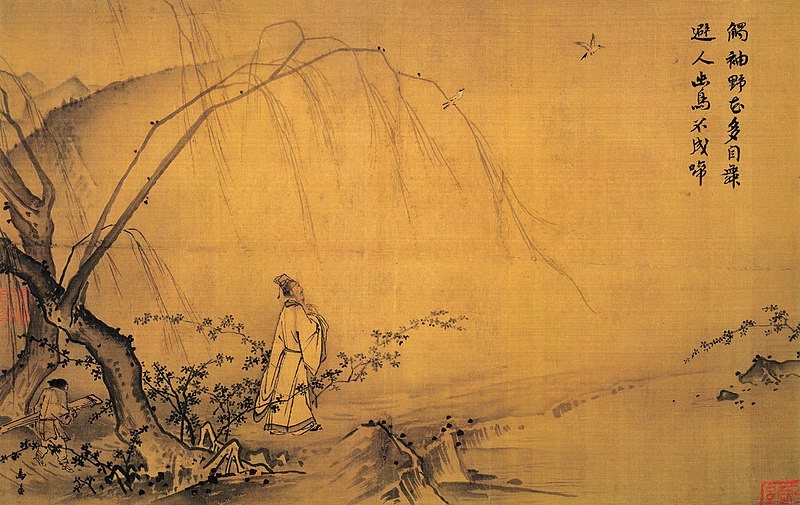
Walking on Path in Spring by Ma Yuan (马远 c.1190 - 1279年)


1. Ma Yuan.  On a Mountain Path in Spring.  Southern Song.  Book p. 66.
3. Wu Zhen.  Stalks of Bamboo By a Rock.  Yuan.  (More examples) Book, p. 75.

Chinese Painting III

Zang Zeduan Detail: "Along the River During the Qingming Festival" (Song dynasty): Bridge

Zang Zeduan "Along the River During the Qingming Festival" (Song dynasty)
[Please click on the image directly above to examine the entire scroll]


Article on this painting at Wikipedia HERE
To "read" a Chinese painting is to enter into a dialogue with the past; the act of unrolling a scroll or leafing through an album provides a further, physical connection to the work. An intimate experience, it is one that has been shared and repeated over the centuries. And it is through such readings, enjoyed alone or in the company of friends, that meaning is gradually revealed. 

Tuesday, March 15, 2011

Chinese Painting II (Wed 16 March)


Fan Kuan & Northern Song dynasty Landscape painting
Article on Fan Kuan at Wikipedia
Song dynasty:  at the Timeline of Art History and at Wikipedia and at the MIA
and this page from Columbia University is excellent & extensive
University course pages on Northern Song Painting: HERE and HERE 
and a brief article on the Fan Kuan painting above here

Sunday, March 13, 2011

Chinese Painting I (Mon 14 March)


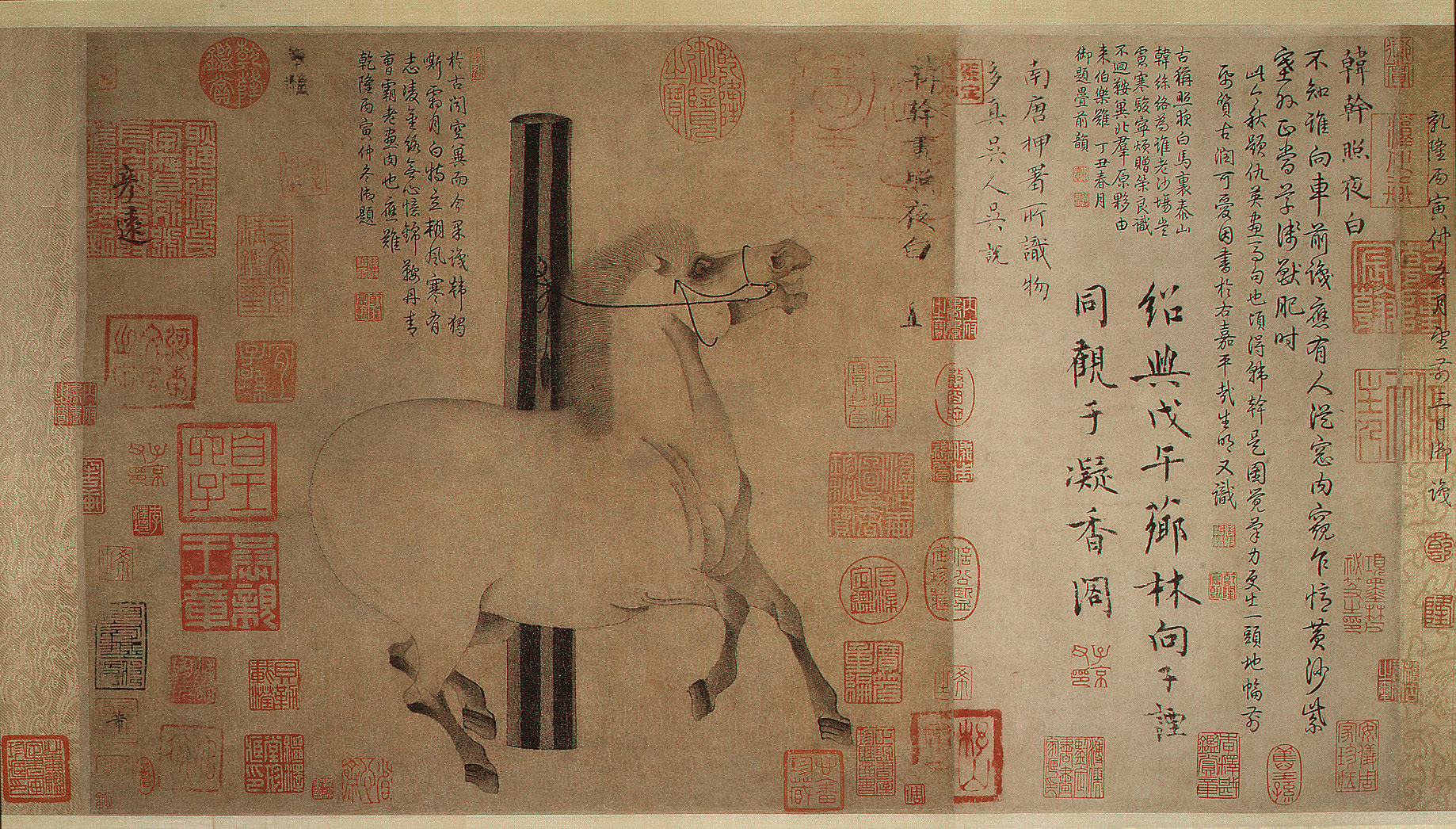
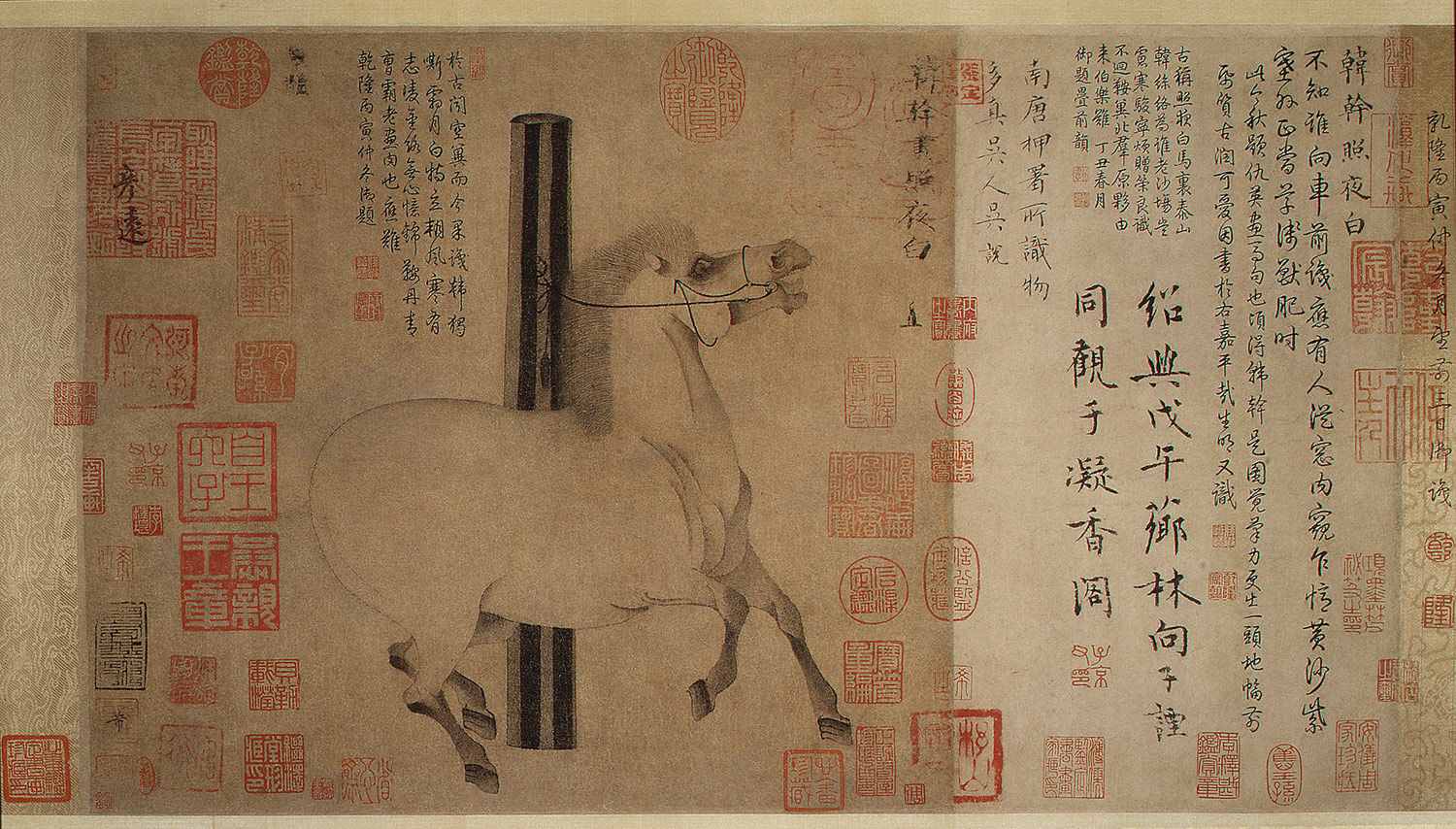
Han Gan: "Night-Shining White" ca 750 (Tang dynasty)
China at the Heibrunn Timeline of Art History INDEX PAGE
  • “Chinese Painting” HERE
  • “Landscape Painting in Chinese Art” HERE
  • “Scholar-Officials” HERE
  • “Chinese Calligraphy” HERE
“A Look at Chinese Painting” (Metropolitan Museum) HERE
“Anatomy of a Masterpiece: How to Read Chinese Paintings” HERE
Chinese Panting in Context (Asia Society) HERE
Key points:
  • Chinese paintings are not usually in the Western format (framed, hung on wall as false window); they can appear on handscrolls, wall scrolls, fans, and in many other formats
  • Chinese paintings typically include written as well as visual content
  • Chinese paintings often are marked with stamps that provide information on ownership of the painting
  • Some beginning ideas on the Chinese aesthetic:
  1. unification & balance between opposites: object / concept; visual / written; figure / ground; etc.  
  2. less emphasis on originality & uniqueness; more on conformity & collaboration
(Also: the “Six Principles of Chinese Painting” stub at Wikipedia)