Monday, January 31, 2011

Dogon Seated Ancestor Couple

For WEDNESDAY 2-2


One page on this work at the Metropolitan Museum of Art.
And another page. 

Related essay on "Couples in Art" (also Metropolitan MoA)

Friday, January 28, 2011

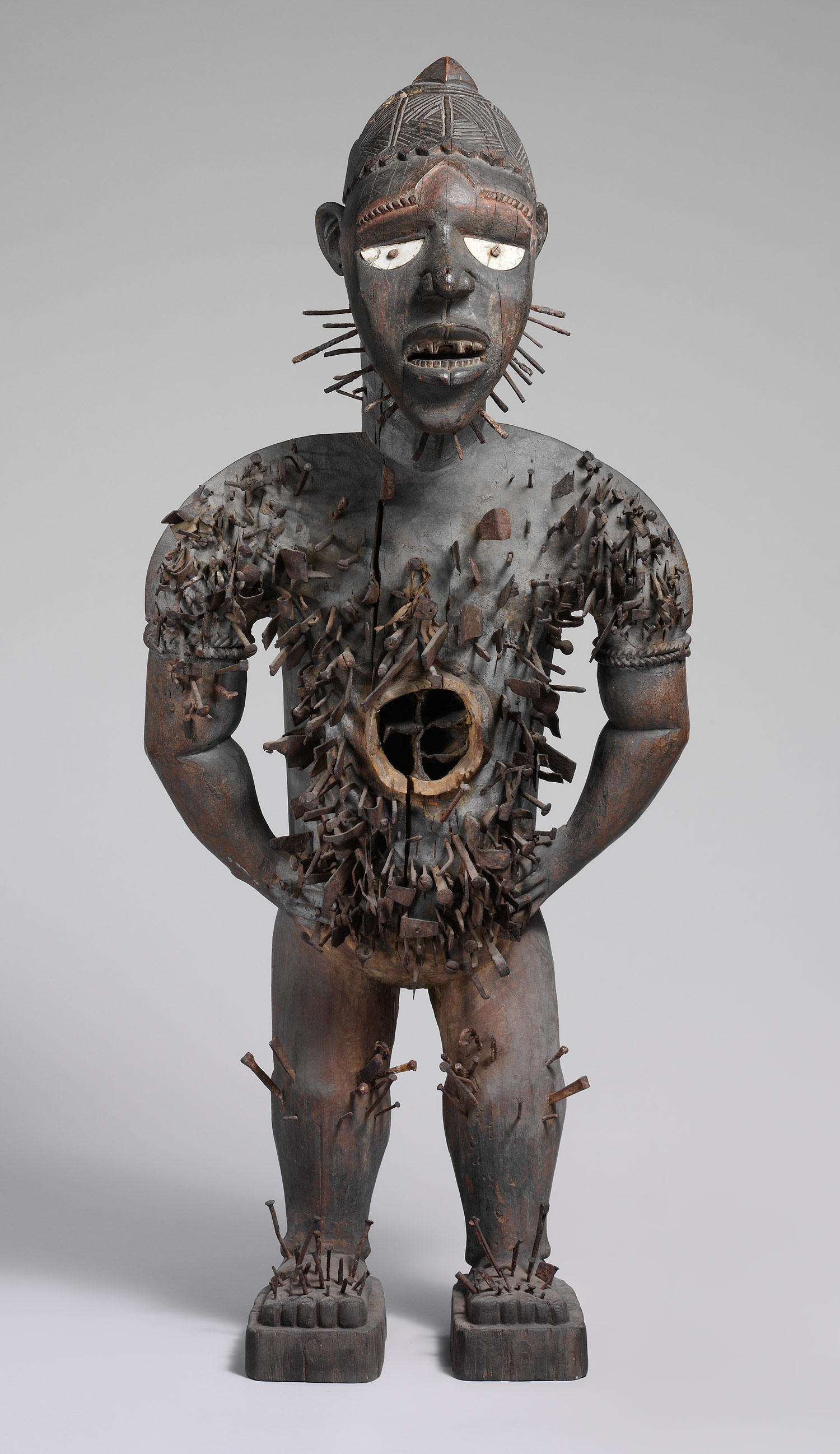
Kongo Nail Figure (nkisi n'kondi)

For MONDAY 1-31:


Mangaaka Power FigureNkisi N'kondi at the Metropolitan Museum 
An article on the ritual use of the Mangaaka Figure

And another example at the Metropolitan Museum

Six different ones at the Brooklyn Museum

And a dog-form one at the World Museum in Liverpool

(Think about how to answer the questions -- especially "what is it for?")


and Coming Up:  on Wednesday, Dogon Ancestor Figures, and on Friday, akuabas.

Art-Thought Experiment: Ikegobo

Imagine:  if a person of power and authority in our own culture had an ikegobo, what would it look like?  What would be on it?  What would it be made of?  What would President Obama's ikegobo be like?  What would Steve Jobs's look like?  Paul McCartney's?  Stella McCartney's?  

Have fun.

P.S.  This is not an assignment!  It's just a way to study.

Thursday, January 27, 2011

The Altar to the Hand (or Ikegobo).  
The one in our book (and shown to the right) is in the collection of the British Museum.  Read about it here.  
Other examples at the Metropolitan Museum in New York:  


Remember to consider how purpose, materials, imagery (iconography), and aesthetic values all relate to one another.  

Tuesday, January 25, 2011

Benin Bronzes and Ancestor Shrines


A Benin Royal Ancestor Shrine like the one shown here is not one art object, but a display involving a lot of specific art objects as well as ritual.

Useful resources on Benin and its art:

This page at the University of Pennsylvania's Museum of Archaeology & Anthropology is exceptionally good -- make sure to read this one!

The Pitt Rivers Museum (Oxford) also has a good article about the Court Art of Benin

And the Heilbrunn Timeline of Art History (Metropolitan Museum of Art) has a lot of useful stuff:

Monday, January 24, 2011

Oni Figure from Ife-Ife


Ife (Metropolitan Museum)

Another example at the British Museum

Another one at the Brooklyn Museum

ALSO: don't neglect the side material in your book:  read the three boxes on "Dating African Art and Identifying African Artists" (p. 187); the one on p. 189 about "Art and Leadership in Africa" and (very important) the one on "Idealized Naturalism at Ife-Ife" on page 190.

Nok Heads


Nok Terracottas (Metropolitan Museum of Art)

Also -- a lot of Nok artifacts have ended up in Western museums and personal collections, but the business of selling Nok artifacts to collectors is really controversial. Here are a couple links that show what I mean.

The Rape of Nok and Kwatakwashi: the crisis in Nigerian Antiquities (University of Cambridge)

UNESCO, Nok terracotta and the Met (Elginism blog)

Nok Heads for Sale (Hamill Gallery)

Friday, January 21, 2011

Daily Schedule for Weeks 2 & 3

Week 2:  African Gods & Kings 
M:  Ife-Ife Oni figures (10-6) (Chapter 10, pp. 191-196 would be a good start)

W: Benin Altarpiece (11-8) 
F:  Benin ikegobo

Week 3: African Power Figures
M: Kongo nkisi nkondi (11-6) 

W: Dogon ancestor couple (11-6) 
F: Ghana akuaba (11-10)

Wednesday, January 19, 2011


The All Blacks (New Zealand's national rugby squad) perform a haka before an international match.  The intersection of traditional and contemporary; of NonWestern and Western.

Tuesday, January 18, 2011

Course Syllabus

Course: FA 210: ART OF THE WORLD (spring term 2011)                                                  
Instructor: Dr. Warren Olin-Ammentorp                                                        
Contact: 655-7102   wolin@cazcollege.edu
Office: 13 Nickerson St – 2nd floor middle office                                   
Office Hrs: TR 1-2:30 (and by appointment)

Course Description / Teaching & Learning Goals:  This course presents a broad introductory survey of non-Western art and art-making: painting, sculpture, craft, and architecture from regions such as Africa, India, Southeast Asia, China, Japan, the Islamic world, and Oceania.  Students in this course will learn to: a) identify and discuss art works from various non-Western cultures in terms of purpose, materials, techniques, aesthetic principles and cultural values; and b) discuss why and how awareness on non-Western art informs Western notions of art and beauty. 

All-College Competencies:  This course addresses and will advance students’ mastery of the following competency areas:  Visual Literacy; Cultural Literacy; Critical Thinking and Problem-Solving. 

Teaching & Required Work: This course will be based on a key topic system.  Each week the course will cover a broad topic through general lecture and discussion of specific examples of the topic.  Students will demonstrate basic knowledge (identification, description) and an ability to discuss and compare (analysis) specific works through written exercises and examinations.  In general, students will apply and answer the following key course questions to everything we study in the course: What is it? Who made it?  What is it for? Why is it made like that? What do we learn from it?

Final course grades will be assessed according to these percentages:

§  75% for 5 exercises – 3 due during the term and 2 due at the final examination meeting
§  25 % for 1 broad general essay – set & written at the final examination meeting
§  participation and general compliance with course requirements

Exercises are written reports that discuss a specific work of art or type of work.  Each exercise must answer each of the key course questions, in appropriate depth and detail.  Each exercise must be typewritten, use clear and correct language (including technical terms) and provide references as necessary.  Students may not repeat topics – although comparison and contrast is welcome and useful, all exercises must be written on different topics.  Thus, although students will be responsible for demonstrating deep knowledge of only five different key topics from the dozen or so covered in the course, their exercises should demonstrate a broad awareness of the themes & issues covered in the whole course.

Text:  Gardner’s Art Through the Ages: Non-Western Perspectives

Proposed Course Topics & Schedule: 

Week 1:  introductory concepts
Week 2:  African gods and kings
Week 3:  African power figures
Week 4:  representations of the Buddha
Week 5:  Buddhist temples
Week 6:  representations of Hindu deities
Week 7:  Chinese art 1: concepts & materials 
Week 8:  Chinese art 2: landscape painting
Week 9:  Islamic decorative art
Week 10: the mosque
Week 11: the Taj Mahal
Week 12: Japanese temples and temple gardens
Week 13:  wabi-sabi and the Japanese tea ceremony
Week 14:  Japanese representative art
Week 15: Aboriginal Australian painting

Friday, May 1, 2009

FINAL EXAMINATION

Section One: compare and contrast: chose any ONE pair of keyworks and write a brief compare & contrast essay. In your essay establish a clear reason for making the comparison; consider specific points of comparison & contrast; and conclude by commenting on what one learns through the comparison.

  • Benin Altarpiece :: First Emperor’s Tomb
  • Gandhara Buddha :: Shaka Triad at Horyu-ji
  • Hindu Temple :: Zen Garden
  • Fan Kuan’s “Travellers Amid Mountains and Streams” :: Hokusai’s “Great Wave”
  • The Ameratsu Shrine at Ise :: The Great Stupa at Sanchi

Section Two: choose any FIVE questions and answer them as clearly and as completely as possible.

  • Explain the purpose(s) of a Chaihitsu (Tea House)
  • Explain wabi-sabi with at least one specific example
  • Describe the subject(s) of Hokusai’s “Great Wave”
  • Explain what pagodas and stupas have in common
  • Describe the typical features of a yamato-e painting
  • Explain the importance of Chinese ceramics
  • Explain the relationship between Zen Buddhism and a Broken-Ink painting
  • Explain why Chinese paintings have writing and marks on them
  • Describe the significance of bamboo in Chinese paintings
  • Describe the system of perspective used in Chinese landscape paintings

Section Three: answer the question as clearly and completely as possible.

Identify and explain two or three of the greatest difficulties American students face when they study non-Western art. Then explain how a serious and dedicated student can attempt to overcome these difficulties.

Rules: Although this is called an exam, I am not asking for hurry-to-finish work. Make sure your answers have a clear thesis supported by appropriate evidence. Feel free to include sketches (hand-drawn only) as illustrations to assist (not replace) your writing. All answers must be typed, and must be written in clear and correct language. If you use any outside sources they must be appropriately referenced and documented. (A plagiarized answer will get you a failing grade on one-third of your total course work, so please be careful about this.)

Due: Hand in your completed work at the examination meeting time (Wednesday, May 6 at 10:30 in our usual classroom).


Any questions? Please email me at wolin@cazenovia.edu
Tuesday, April 28, 2009

JAPAN ukiyo-e & Hokusai

Ukiyo-e article at Wikipedia LINK
The Production of Japanese Woodcut Blocks (J. Noel Chiappa) LINK

Hokusai's 36 Views of Mount Fuji LINK

Japanese prints (Museum of Fine Arts, Boston) LINK
Japanese prints (Minneapolis Institute of Art) LINK

Monday, April 20, 2009

JAPAN: tea ceremony, tea house


Chashitsu @ the Minneapolis Institute of Arts LINK
Wikipedia article on the Japanese Tea ceremony LINK
Wikipedia article on the Chashitsu LINK
Website on everything related to the Tea Ceremony LINK
Useful resources on the Tea Ceremony & related arts LINK

Wednesday, April 15, 2009

JAPAN: zen gardens


We'll be studying three gardens over two days.

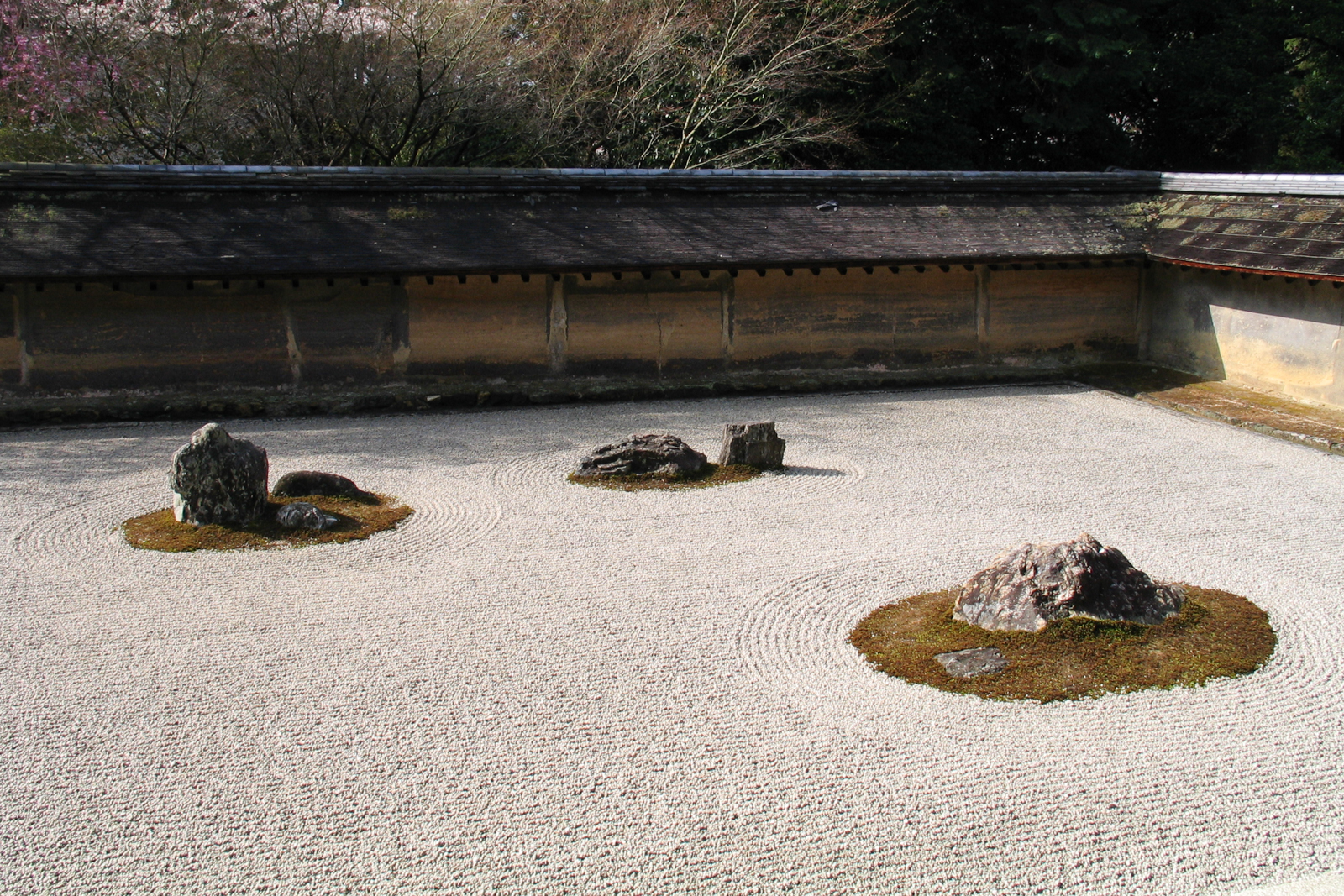
First, we'll look at the Daisen-in Garden at Daitoku-ji temple in Kyoto.
Then, we'll look at the famous garden at Ryoan-ji.

We will also take some time with the garden mentioned in our book, Saiho-ji, but I'd prefer you do journal entries on the other gardens.

There's one excellent website that lets us study the Japanese garden in general, and all of these gardens in specific: The Japanese Garden, created by Clifton Olds, Emeritus Professor of Art History at Bowdoin College. Everything you need can be found by looking around in this website, which is both informative and well-designed! Enjoy.

Tuesday, April 14, 2009

JAPAN: muromachi period painting


  • Muromachi Period (ToAH) LINK
  • haboku example (Smithsonian) LINK
  • Sesso Toyo article & example (British Museum) LINK
  • Sesshu Toyo (Wikipedia) LINK
  • Sesshu Toyo Online (artcyclopedia) LINK

Sunday, April 12, 2009

JAPAN yamato-e


  • The complete Genji Monogatari is available online in English (with woodcut illustrations from 1650 -- so much later than the Heian period) -- by Harumasa Yamamoto LINK
  • yamato-e (Timeline of Art History) LINK
  • yamato-e (British Museum) LINK
  • Japanese narrative scrolls (University of Pittsburgh) LINK

Thursday, April 9, 2009

JAPAN: Shaka triad & Kudara Kannon

Both are covered (briefly) on the Wikipedia page for Horyu-ji (see last class)

Also:

  • Youtube video of the Kudara Kannon replica LINK
  • article on Tori Busshi at Wikipedia LINK
Also useful:
  • Sjoquist, Douglas P. "Identifying Buddhist Images in Japanese Painting and Sculpture." LINK

Tuesday, April 7, 2009

JAPAN: Horyu-ji kondo and pagoda


Horyu-ji at Asian Historical Architecture LINK
Horyu-ji at Great Buildings Online LINK
Horyu-ji at Wikipedia LINK

Friday, April 3, 2009

JAPAN: Ise Shrine (Ise-jingu)


Official Website LINK
Official Site "manga" (^_^) LINK

Sacred Spaces & Shinto (UC Berkeley) LINK
(note the page at this site for Ise)

Thursday, April 2, 2009

JAPAN Assignments

Week 10:
F: Housekeeping & Japan intro

Week 11:

M:
Ise-Jingu (Shinto Shrine) 5-5
W: Horyu-ji Kondo 5-6
F: Horyu-ji Pagoda & Shaka triad 5-7

Week 12:
M: Heian period / yamato-e painting 5-13
W: Muromachi & Momoyama period painting 6-2 / 6-5
F: Zen Gardens

Week 13:
M: Zen Gardens
W: Tea House 1 (Tea House ceremony & architecture) 6-7
F: Tea House 2 (Tea House art) 6-6

Week 14:
M: ukiyo-e 6-11
W:
ukiyo-e 6-12
F: last day of class

Saturday, March 28, 2009

Chinese Pottery

Read in the text:


  • Chinese Earthenware & Stoneware (41)
  • Glazed Earthenware Sculpture (54)
  • Cizhou Pottery (56)
  • Celadon Ware (62)
  • Dragon & Phoenix (68)
  • Chinese Porcelain (69)
  • Qing Porcelain (75)

And check out the following:

  • Chinese Porcelains (Wikipedia) LINK
  • Koryo Celadon (Met) LINK
  • In Pursuit of White (Met) LINK
  • Porcelains of the Yuan and Early Ming Periods (Asia Society) LINK
  • Imperial Chinese Ceramics of the 15th Century (Asia Society) LINK

Choose any two works from the text (or one from online) for you journal. One of them should be from the Ming Dynasty -- the Temple Vase (4-4) would be a good choice

See you Friday!

Wednesday, March 25, 2009

More Chinese Painting


General Wikipedia article: LINK
Landscape Painting in Chinese Art (ToAH) LINK

Yuan Dynasty (ToAH) LINK
Yuan Landscape Painting (University of Washington) LINK
Ming Dynasty (ToAH) LINK

Lofty Mount Lu (at the National Palace Museum, Taipei) LINK
Shen Zhou (wikipedia) LINK

Dong Qichang (wikipedia) LINK

Monday, March 23, 2009

Chinese Calligraphy

Useful videos:


Sunday, March 22, 2009

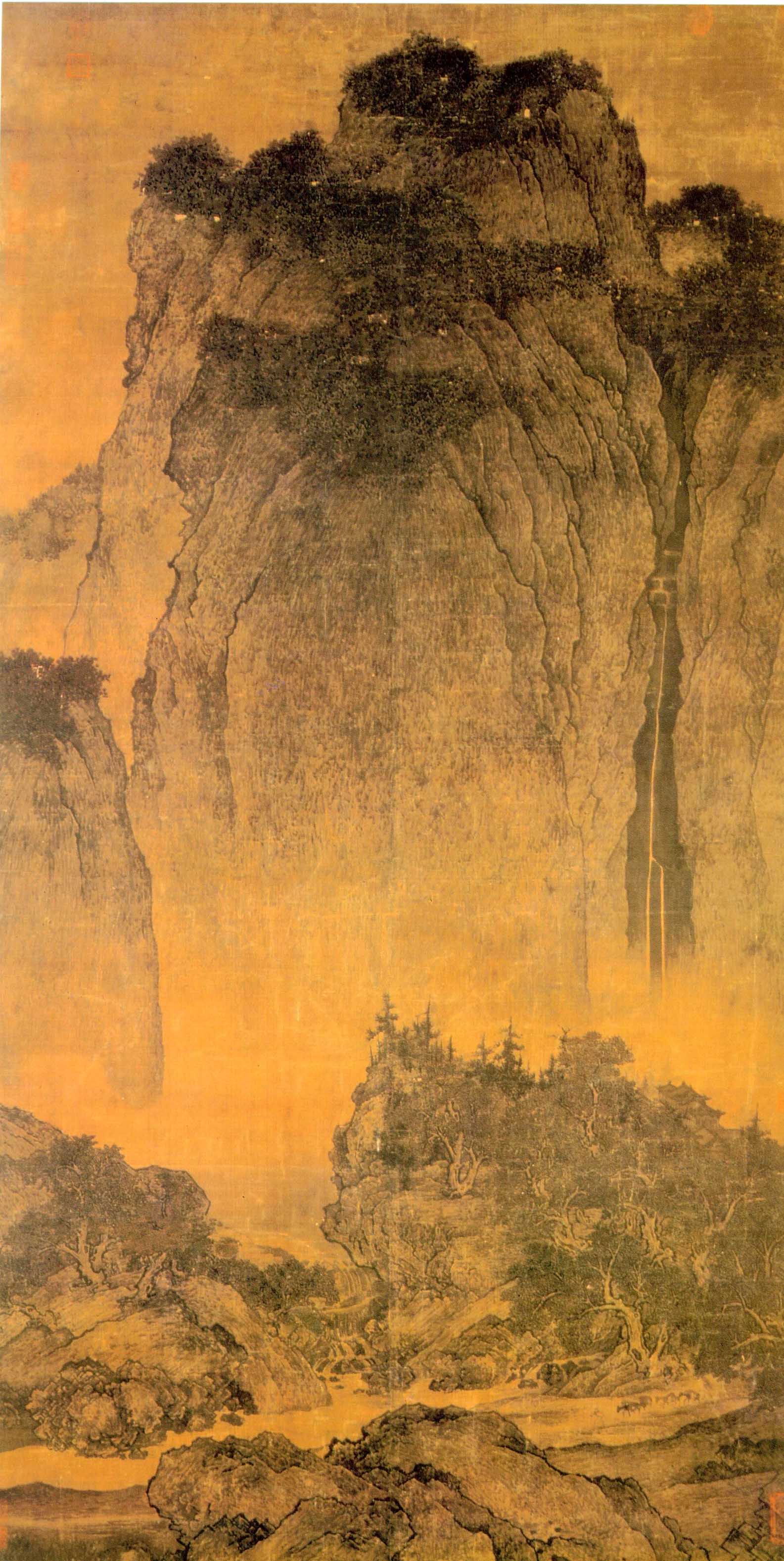
Fan Kuan


Fan Kuan : Travelers amid Mountains and Streams. Northern Song (c. 990-1030)
(click image for larger view)

  • Northern Song Dynasty (Timeline of Art History) LINK
  • Chinese Painting (ToAH) LINK
To "read" a Chinese painting is to enter into a dialogue with the past; the act of unrolling a scroll or leafing through an album provides a further, physical connection to the work. An intimate experience, it is one that has been shared and repeated over the centuries. And it is through such readings, enjoyed alone or in the company of friends, that meaning is gradually revealed.
  • A Look at Chinese Painting (Metropolitan Museum of Art) LINK

Wednesday, March 18, 2009

Foguang (or Fogang) Pagoda


  • The Song Dynasty in China (Asian Topics in World History @ Columbia University) LINK
    (this site is important for the paintings we'll be looking at next week too! so read it!)
  • Architecture of the Song Dynasty (Wikipedia) LINK
  • Pagoda (Wikipedia) LINK
  • the Pagoda of Fogong Temple (Wikipedia) LINK

Monday, March 16, 2009

CHINA Assignments


Week 8:
M: Housekeeping & China intro

W: the First Emperor's Terracotta Army (3-5)
F: Fougang Si Pagoda (3-21 & 22)

Week 9:
M: Fan Kuan: Travelers among Mountains and Streams (3-18) Northern Song School
W: Ma Yuan: On a Mountain Path in Spring (3-23) Southern Song School
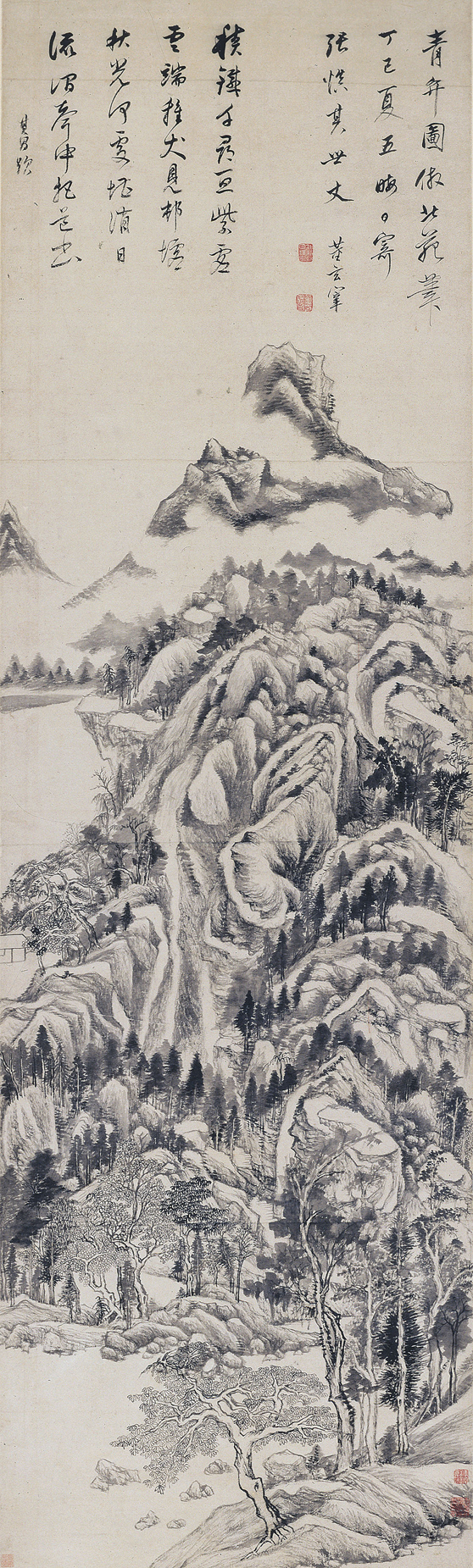
F: Dong Qichang: Dwelling in the Qingbian Mountains (4-11) Ming Dynasty

Week 10:
M: No Class -- assignment TBA
W: No Class -- assignment TBA

F: Ceramics -- assignment TBA

Sunday, March 15, 2009

The First Emperor's Tomb, Xian -- Terracotta Warriors

[picture to be added]

Friday, March 13, 2009

MIDTERM EXAMINATION

Tasks: Choose any FIVE of the following questions and answer them as clearly and as completely as possible.


Rules: Although this is called an exam, I am not asking for hurry-to-finish work. Make sure your answer has a clear thesis supported by appropriate evidence. Feel free to include sketches (hand-drawn only) as illustrations to assist (not replace) your writing. All answers must be typed, and must be written in clear and correct language. If you use any outside sources they must be appropriately referenced and documented. (A plagiarized answer will get you a failing grade on one-third of your total course work, so please be careful about this.)


Due: Hand in your completed work no later than class-time on Friday the 20th.


  • Explain the various meanings an ikegobo might have.
  • Explain how either an akua’ba or an nkisi n’kondi would be created and used.
  • Describe and explain the typical features of a sculpture of the Buddha.
  • Describe the key features of a typical Hindu temple.
  • What is the subject of a Shiva nataraja – and how is that subject portrayed in such a work?
  • Explain the purpose(s) of the Taj Mahal
  • Explain, with at least one example of each, the difference between perceptual and conceptual naturalism.
  • Explain the differences between prestige art and of communal art – using at least one specific example of each.
  • Explain the most important thing(s) you've learned in the course so far.


Any questions? Please email me at wolin@cazenovia.edu

Tuesday, March 3, 2009

Monday, March 2, 2009

Schedule

This week:

Monday: Northern Temples

Wednesday: Taj Mahal

Friday: Taj Mahal

Over break: Midterm Exam will be posted

After break: we'll begin China
  • the First Emperor's army (Xian)
  • Fouguang Si Pagoda
  • Song Dynasty painting

Northern Temple Style: Khajuraho